
Two Trees and the Goodness of God
God’s boundary is not the enemy of His goodness;
it is part of His goodness.
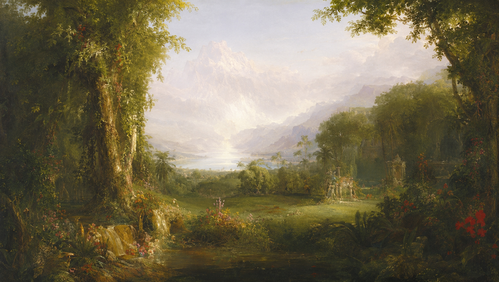
Picture the Garden of Eden not as a bare room with one forbidden object in the middle, but as a world overflowing with life. Trees pleasant to the sight. Food good for the body. Beauty everywhere. Abundance without deficit. Nothing lacking. Nothing thin. Nothing stingy.
That matters because Genesis 2:15–17 is often remembered mainly for the prohibition: “Do not eat.” But before God gives the boundary, He gives a world of lavish provision. Before the warning, there is abundance. Before the “no,” there is a resounding “yes.”
Genesis 2:9 tells us that the tree of life stood in the midst of the garden. Genesis 2:16 tells us God commanded the man, “You may surely eat of every tree of the garden.” The first rule of Eden was not, “Prove yourself.” It was, “Receive freely.”
God’s good design for His people is that we trust Him enough to simply receive His abundant goodness by faith instead of grasping for lesser things through our own wisdom and autonomy. And this invitation still comes to us in and through Jesus Christ.
That matters because Genesis 2:15–17 is often remembered mainly for the prohibition: “Do not eat.” But before God gives the boundary, He gives a world of lavish provision. Before the warning, there is abundance. Before the “no,” there is a resounding “yes.”
Genesis 2:9 tells us that the tree of life stood in the midst of the garden. Genesis 2:16 tells us God commanded the man, “You may surely eat of every tree of the garden.” The first rule of Eden was not, “Prove yourself.” It was, “Receive freely.”
God’s good design for His people is that we trust Him enough to simply receive His abundant goodness by faith instead of grasping for lesser things through our own wisdom and autonomy. And this invitation still comes to us in and through Jesus Christ.
The First Rule Was Abundance
Genesis 2:16 says, “And the LORD God commanded the man, saying, ‘You may surely eat of every tree of the garden.’” That wording matters. This is not a mild suggestion. It is a command. God commands the first human to feast on the goodness He has provided.
This reveals the character of God from the beginning. God is not stingy. He is not operating from lack. He is not standing over His creation with clenched hands. He opens His hand and gives.
Psalm 145:16 says, “You open your hand; you satisfy the desire of every living thing.” James 1:17 says every good and perfect gift comes from the Father. Psalm 34:8 invites us, “Oh, taste and see that the LORD is good!”
The first rule of life with God is not suspicion. It is reception. God gives life, place, beauty, food, vocation, nearness, and abundance. Then, and only then, He gives a boundary that teaches humanity how to live as creatures before Him.
This reveals the character of God from the beginning. God is not stingy. He is not operating from lack. He is not standing over His creation with clenched hands. He opens His hand and gives.
Psalm 145:16 says, “You open your hand; you satisfy the desire of every living thing.” James 1:17 says every good and perfect gift comes from the Father. Psalm 34:8 invites us, “Oh, taste and see that the LORD is good!”
The first rule of life with God is not suspicion. It is reception. God gives life, place, beauty, food, vocation, nearness, and abundance. Then, and only then, He gives a boundary that teaches humanity how to live as creatures before Him.
The Tree of Life Stands at the Center
Genesis 2:9 says the tree of life was “in the midst of the garden.” At the center of Eden stands a mysterious and sacred tree connected to eternal life received from the hand of God.
This is not accidental. Eden is a sacred space, a garden where heaven and earth meet, where God dwells with His people, and where life flows outward. At the center of that sacred place is provision. Life is not something Adam must manufacture. Life is gift. Life is received.
That is still true. We are always tempted to think life is something we must seize, achieve, manage, or secure. But Genesis begins with a different vision. Real life comes from God, and human flourishing begins by receiving from Him.
This is not accidental. Eden is a sacred space, a garden where heaven and earth meet, where God dwells with His people, and where life flows outward. At the center of that sacred place is provision. Life is not something Adam must manufacture. Life is gift. Life is received.
That is still true. We are always tempted to think life is something we must seize, achieve, manage, or secure. But Genesis begins with a different vision. Real life comes from God, and human flourishing begins by receiving from Him.
The Second Rule Was Protection
Genesis 2:17 says, “But of the tree of the knowledge of good and evil you shall not eat, for in the day that you eat of it you shall surely die.”
God’s only prohibition in Eden is, in essence, “Do not do the thing that will kill you.” That is not cruelty. That is mercy.
The tree of the knowledge of good and evil was not a spooky tree in a barren wasteland. Genesis 2:9 tells us every tree was pleasant to the sight and good for food, and Genesis 3 will confirm that this tree looked desirable too. Human eyes could not simply look at the tree and know the difference. That is the point.
The issue was not whether knowledge is bad. Wisdom is good. Discernment is good. Knowing good from evil is good when received from God. The question is whether humanity will receive wisdom from God’s word or seize moral authority for itself.
The tree of life represents receiving life as gift. The tree of the knowledge of good and evil represents grasping for wisdom as autonomy.
Autonomy means self-rule: deciding for ourselves what is good, wise, harmful, life-giving, or destructive apart from God. That is not freedom. Genesis 2 shows us that freedom is found in relationship with God, trusting Him as God and acknowledging that we are not.
God’s only prohibition in Eden is, in essence, “Do not do the thing that will kill you.” That is not cruelty. That is mercy.
The tree of the knowledge of good and evil was not a spooky tree in a barren wasteland. Genesis 2:9 tells us every tree was pleasant to the sight and good for food, and Genesis 3 will confirm that this tree looked desirable too. Human eyes could not simply look at the tree and know the difference. That is the point.
The issue was not whether knowledge is bad. Wisdom is good. Discernment is good. Knowing good from evil is good when received from God. The question is whether humanity will receive wisdom from God’s word or seize moral authority for itself.
The tree of life represents receiving life as gift. The tree of the knowledge of good and evil represents grasping for wisdom as autonomy.
Autonomy means self-rule: deciding for ourselves what is good, wise, harmful, life-giving, or destructive apart from God. That is not freedom. Genesis 2 shows us that freedom is found in relationship with God, trusting Him as God and acknowledging that we are not.
The tree of life represents receiving life as gift.
The tree of the knowledge of good and evil represents
grasping for wisdom as autonomy.
The Real Question Is Trust
Faith is not merely a repair tool after sin enters the world. Trusting God is built into human life from the beginning. Eden is innocent, good, beautiful, and abundant, but humanity still must live by faith.
God says, “Everything is gift. One thing is forbidden. Death is real. Trust me.” The serpent will soon suggest the opposite: God is withholding. The boundary is suspicious. Death is not real. Trust yourself.
That same choice still presses into ordinary life. God, I know what You say about forgiveness, but. God, I know what You say about money, truth, sexuality, rest, bitterness, enemies, and obedience, but. So often, we call autonomy freedom while reaching toward death.
Proverbs 14:12 says, “There is a way that seems right to a man, but its end is the way to death.” Jeremiah 2:13 says God’s people forsook the fountain of living waters and tried to make broken cisterns for themselves.
This is the human condition. We are offered life, and we grasp for control.
God says, “Everything is gift. One thing is forbidden. Death is real. Trust me.” The serpent will soon suggest the opposite: God is withholding. The boundary is suspicious. Death is not real. Trust yourself.
That same choice still presses into ordinary life. God, I know what You say about forgiveness, but. God, I know what You say about money, truth, sexuality, rest, bitterness, enemies, and obedience, but. So often, we call autonomy freedom while reaching toward death.
Proverbs 14:12 says, “There is a way that seems right to a man, but its end is the way to death.” Jeremiah 2:13 says God’s people forsook the fountain of living waters and tried to make broken cisterns for themselves.
This is the human condition. We are offered life, and we grasp for control.
Jesus Is the Tree of Life for Us
The story does not end with Adam’s failure or ours. The pattern of trees, sacrifice, and God’s presence runs through Scripture until Jesus comes.
The Word becomes flesh. Life comes near. Jesus is the way, the truth, and the life. He is the true life of God walking among us.
Yet humanity does not merely reject Him. We take the Tree of Life and nail Him to a tree. Jesus is lifted up on the cross, bearing our sin. He dies and is buried in the ground like a seed. Then, three days later, He rises.
Now He says, “I am the vine; you are the branches” (John 15:5). Joined to Him by faith, we stop grasping and begin receiving. We receive forgiveness. We receive life. We receive the goodness of God that we could never produce or achieve on our own.
So receive God’s goodness with gratitude. Name the poison tree you keep reaching for. Trust God’s wisdom at the point of resistance. The place where His word feels most restrictive may be the very place where He is guarding your life.
Stop grasping. Start receiving life in Jesus.
The Word becomes flesh. Life comes near. Jesus is the way, the truth, and the life. He is the true life of God walking among us.
Yet humanity does not merely reject Him. We take the Tree of Life and nail Him to a tree. Jesus is lifted up on the cross, bearing our sin. He dies and is buried in the ground like a seed. Then, three days later, He rises.
Now He says, “I am the vine; you are the branches” (John 15:5). Joined to Him by faith, we stop grasping and begin receiving. We receive forgiveness. We receive life. We receive the goodness of God that we could never produce or achieve on our own.
So receive God’s goodness with gratitude. Name the poison tree you keep reaching for. Trust God’s wisdom at the point of resistance. The place where His word feels most restrictive may be the very place where He is guarding your life.
Stop grasping. Start receiving life in Jesus.
Recent
Archive
2026
January
February
March
April
May
August
2025
January
February
March
June
July
November
2024
December
Finding Hope in God's Presence: Lessons from MosesDevotional: Seeking God's PresenceDevotional: Finding Rest in ChristDevotional: God Revealed in ChristDevotional: Hope in the WildernessDevotional: Living in God's Presence ReadingFinding Peace in the Storms of LifeDevotional: Peace in the StormDevotional: From Faith in Christ to the Faith of ChristDevotional: The Kingdom's PeaceDevotional: Incarnation - God With UsDevotional: Come and RestFinding True Joy in God's PresenceDevotional: The Fertile Soil of God's LoveDevotional: Trusting in God's Sovereign SupplyDevotional: Embracing God's Presence in the EverydayThe True Meaning of Christmas: A Love That TransformsReflecting on the Past, Praying for the Future: A Journey of Gratitude and Hope
No Comments